
Note from Jill: Kate Hannigan is filling in for Barb Rosenstock today, and boy, are you in for a treat. Take it away, Kate!

Even though I’m a grown woman, I spend a lot of time thinking about the nine-year-old I once was. Reading and writing didn’t come easy to me back then, but imaginative play sure did. I carried a tiny action figure in my pocket at all times, built worlds in backyard gardens, and devoted an impressive amount of effort to spying on my older siblings.
When Santa gave me a diary with a lock and key, and my third-grade teacher gave me a love of words, they delivered just the tools I needed to cultivate that imagination. Before turning out the lights at night, I began to jot down all kinds of things. Lists, grievances, poetry, mysteries. When I look back, this period formed the foundation of my creative life. I wanted to write down things that amused me, scared me, outraged me. The news of the day. It led me to a career in newspaper journalism and now books for kids.
But what would my writing life be like if I were in elementary school today? As AI does the snooping and summarizing for us, what impact will it have on young creatives? What happens when we shut off those parts of our brain and go with the instantaneous answers? I’ve been thinking a lot about figures from history who were big readers and writers, and how books, language, and storytelling shaped their lives and, as a result, ours.
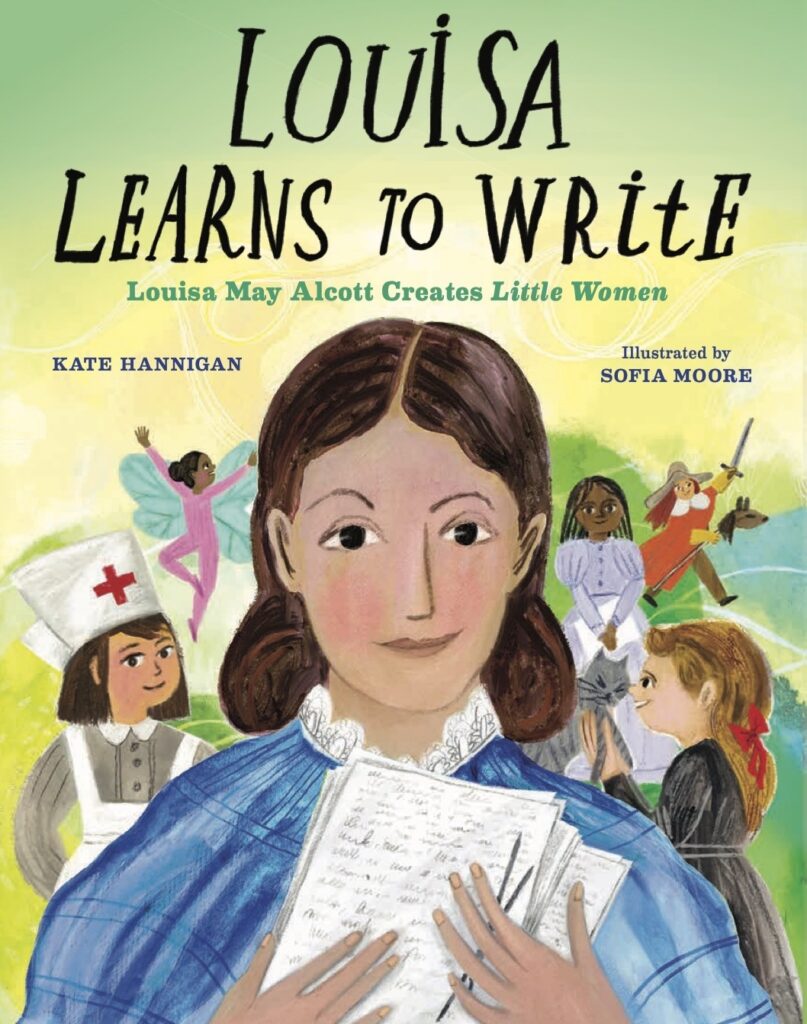
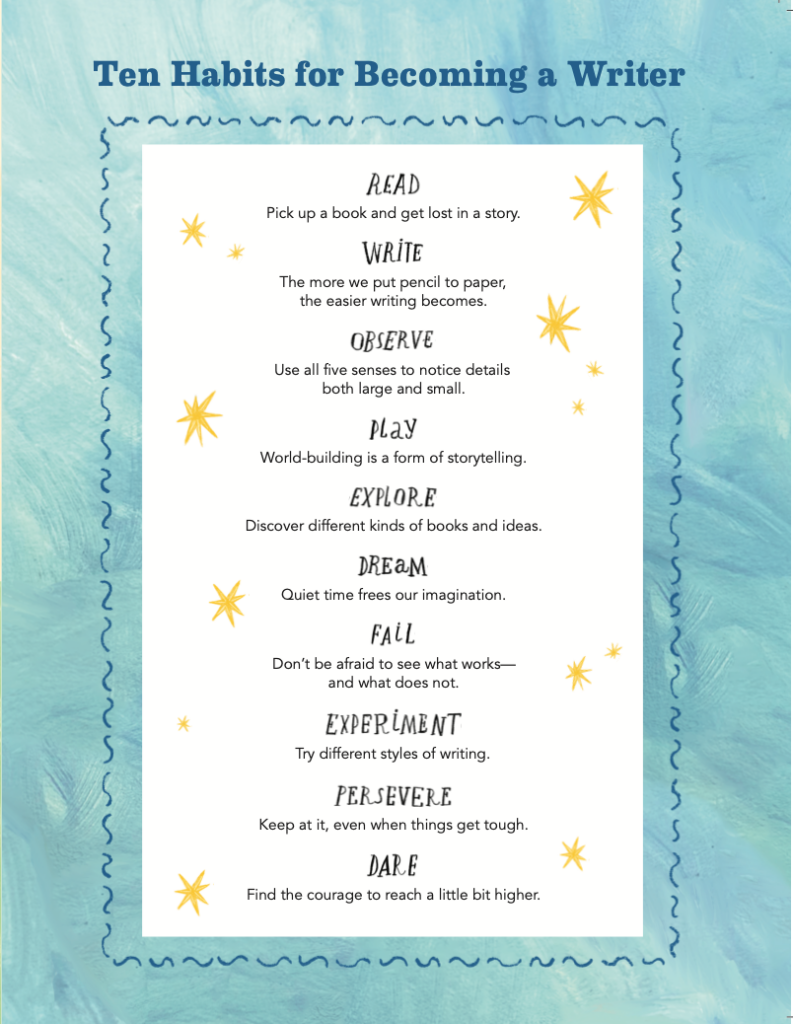
When I researched and wrote Louisa Learns to Write: Louisa May Alcott Creates Little Women (Calkins Creek, January 2026; illustrated by Sofia Moore), I was drawn to her imaginative mind and the forces that helped shape it. I wanted to bring to a new generation of readers the story of Louisa’s childhood with her beloved sisters, immersed in the outdoors as well as in books, language, and, best of all, playtime. I structured my book’s narrative around what I call ten “habits” that we cultivate on the way to becoming writers, habits that Louisa herself developed.
Read. Write. Observe. These are just some of the traits. But what I tried to emphasize in showing what Louisa experienced on her journey to becoming an author is that writing takes work. That it doesn’t just magically fall into place. That creativity requires us to think hard about what we want to give the world. Persevere. Fail. Dare. That it’s not about what a large language model spits back but rather what we, as unique individuals, experience and what we want to share.
Louisa authored many books, under her own name and others, but her Little Women endures more than 150 years later because of its explorations into deeply human questions. What does it mean to belong to a family yet feel like an outsider? How do we go on after losing someone we treasure? Why do we have to grow up? Since its publication in 1868, her tale of a girl with big dreams has never gone out of print.

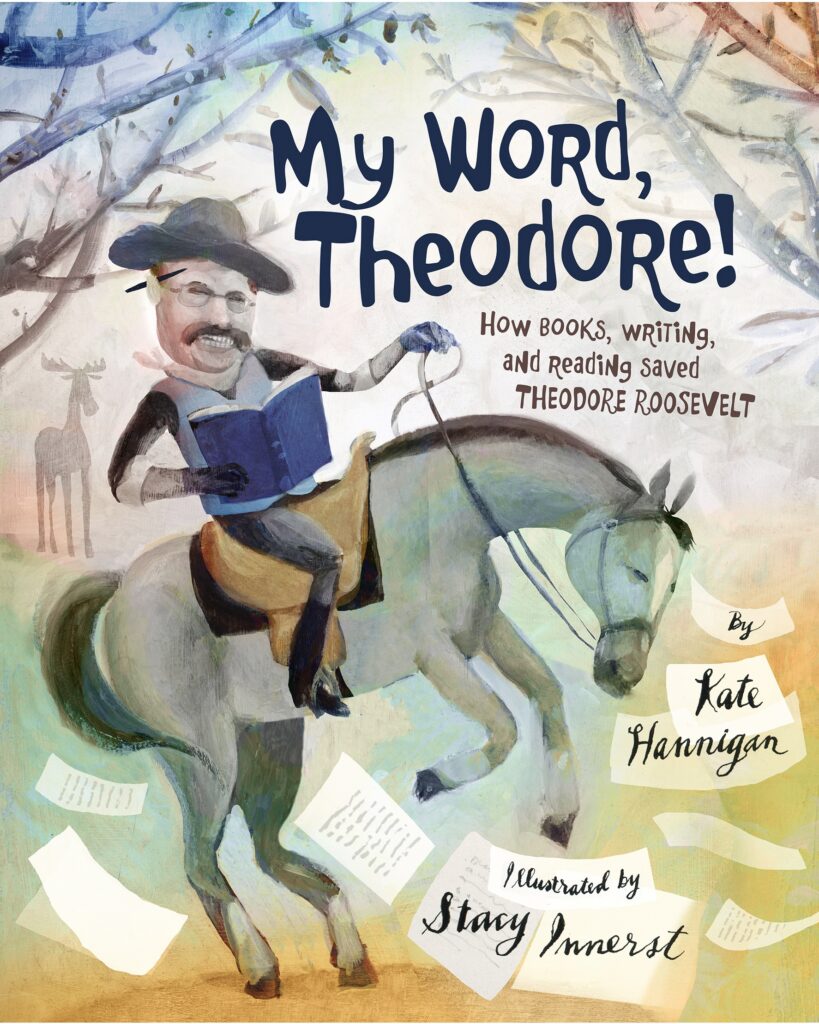
I approach the importance of reading and writing again in another picture book, publishing this fall. My Word, Theodore! How Books, Writing, and Reading Saved Theodore Roosevelt (Calkins Creek, November 2026; illustrated by Stacy Innerst) explores how stories helped one of our most dynamic presidents get through the darkest periods of his life. Theodore possessed an insatiable curiosity and was a lifelong writer and reader, and he began writing his first serious book in college as a means of processing his father’s sudden death.
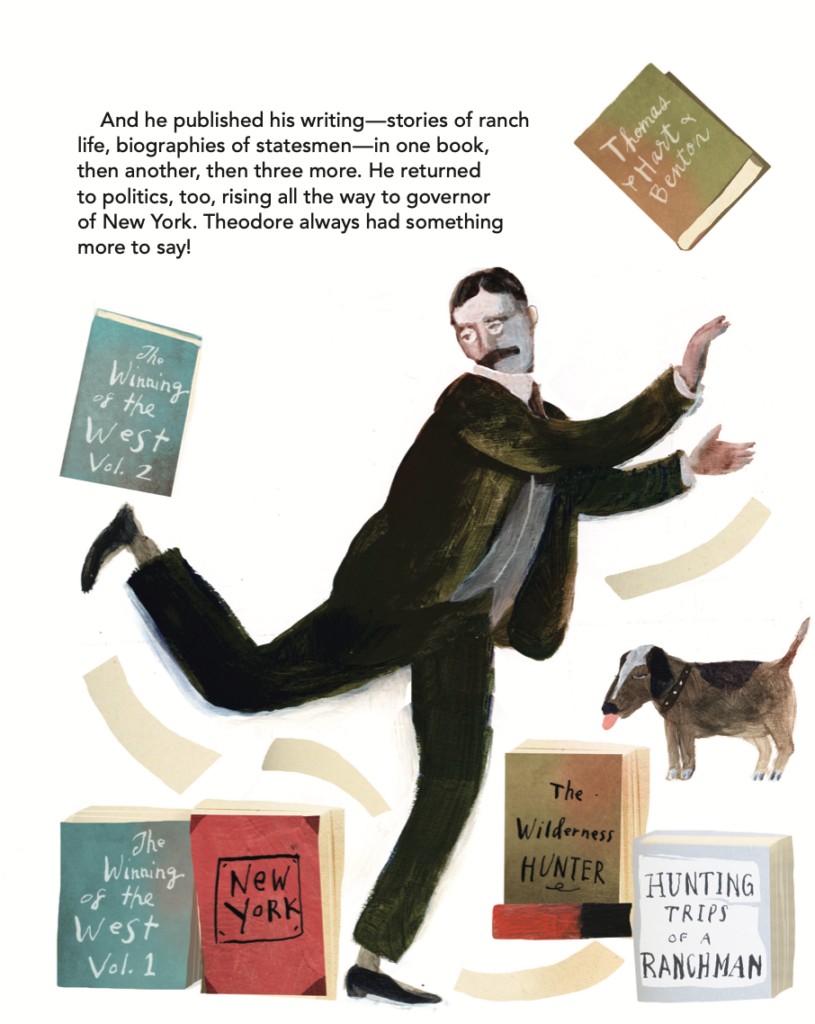
Years later, tragedy struck again when Theodore’s mother passed away on the same day as his wife, Alice, who had just given birth to their first child. To work through the grief, he set out alone to the Badlands of the Dakota Territories. There he found comfort in nature and books. Reading and writing helped him through the sadness, and he eventually returned to New York and went on to become leader of the progressive movement, protector of our great outdoor spaces, and our 26th president. He went on to write more books, too, thirty-five in total.
Theodore Roosevelt earned the title of being our reading-est and writing-est president, devouring two and sometimes three books per day. What better role model is there than a president who prizes reading, writing, and books so highly?
When a would-be assassin fired at Theodore in 1912, it was his own writing that saved him. The bullet ripped through his 50-page speech and glasses case, tucked in a chest pocket, but didn’t kill him. Theodore insisted on delivering his speech, and he talked for more than an hour before finally agreeing to head to a hospital.
So, what do authors like Louisa and Theodore have to teach us? That when we write down our own unique thoughts, we’re developing a powerful skill. That our writing can connect us as human beings. That our writing has the power to heal, lift, inspire. Transform. Not only our reader’s life but our own as well.
And, maybe, our writing has the power to save us too.
Kate Hannigan writes fiction and nonfiction for young readers, and her books on Louisa May Alcott and Theodore Roosevelt are her 15th and 16th titles. When she’s not at her laptop working on new projects, you can find her walking her dog on the lakefront in Chicago or online at KateHannigan.com

Persevere. Fail. Dare. As a writer those are part of each day. I will definitely be getting these books. Thanks for sharing Jill!
Hi Deb! Thanks so much for taking an interest in the books! I hope you enjoy them!
Wow. These books sound amazing. Congrats! I can’t wait to get my hands on them!
Hi Debra! The Louisa book published in January and is out in the world, but Theodore doesn’t publish until November–Thanksgiving week, I think. I hope you enjoy them!
I love how you’ve discovered how the themes of reading and writing were integral to the lives of these two amazing people! Thank you, Kate & Jill!
Wow. Both of these books sound incredibly inspiring. So much I didnt know! A great resource for kids and adults alike.
Hi Marty. Thanks for your comments. I agree that they’re such inspiring figures from history! And that picture books are great for readers of all ages! I hope you enjoy the books.
Hi Tina! Thanks for your comment! I probably should devote some time to looking at remarkable figures from history and their sense of play! What free playtime meant to them. Could be a fun book!
These sound marvelous. Just put them on hold at the library!
Hi Susan! Thanks so much for taking an interest in the books! It means a lot.
Kate, I love seeing nonfiction written in such an appealing way like your books! There were no stories like this when I was in elementary school.
I loved reading about your books, Kate. What a treasure for both kids and adults. Going to the library to check them out. Thank you.